According to research published in PLOS Biology, light exposure has a direct impact on circadian rhythms, sleep quality, cognitive function, and overall well being. The study highlights how lighting environments influence human health far beyond visibility alone. (PLOS)
Well being is shaped by the environments we spend time in.
And few elements influence those environments more than light.
Lighting affects how we feel, how we focus, how we rest, and how we recover. It impacts energy levels during the day and sleep quality at night. Yet despite this, lighting is still often treated as a purely functional element within design.
Something to illuminate a space.
In reality, it does far more than that.
The human body responds constantly to light. Not only visually, but biologically.
Exposure to bright, cooler lighting during the day supports alertness, concentration, and productivity. As the day progresses, warmer and more controlled lighting helps the body transition naturally into rest.
When lighting lacks balance, well being is affected.
Overly harsh lighting can create fatigue and discomfort. Excessive brightness increases visual strain. Poorly controlled colour temperatures can disrupt natural sleep cycles and affect how comfortable a space feels over time.
This is why lighting design should never be approached only from a technical perspective.
It should be approached from a human one.
Lighting control plays a major role in this.
Morning: 5000–6500K — Blue-enriched activation
Midday: 4000–5000K — Focus/productivity
Evening: 2700–3000K — Relaxation
Night: 1800–2400K — Minimal circadian impact
This creates environments that support well being rather than work against it.
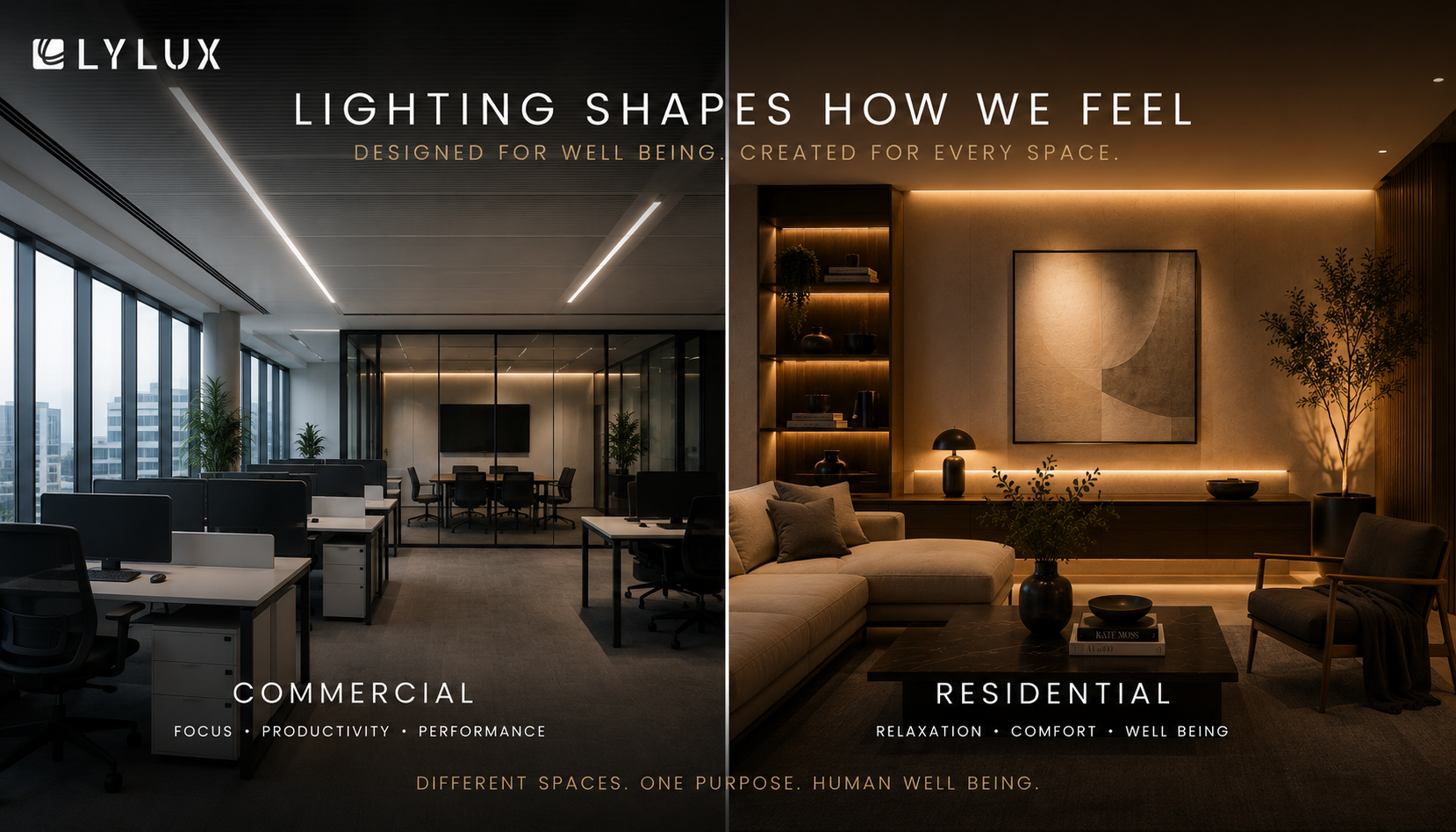
In residential spaces, softer evening lighting helps encourage relaxation and improve sleep quality.
In workplaces, balanced lighting with controlled glare reduces fatigue and improves concentration across longer periods.
In hospitality, lighting directly affects emotional comfort. The atmosphere people remember is often created more by lighting than by materials themselves.
The difference is not always visible immediately.
But it is always felt.
At Lylux, lighting is considered beyond visibility alone. Every environment should support comfort, balance, and the overall experience of the people within it.
Because good lighting does not only change how a space looks.
It changes how people feel.